

In the ever-evolving landscape of ecommerce, relying solely on traditional keyword-based SEO is no longer enough to guarantee success. Shopify store owners need to broaden their strategies to encompass emerging trends like voice search and prioritize providing an exceptional user experience (UX). This article will explore how to optimize your Shopify store for these crucial elements, helping you attract more customers, improve your search engine rankings, and ultimately, boost your sales.
The Rise of Voice Search in Ecommerce
Voice search is rapidly changing the way people interact with the internet, and ecommerce is no exception. With the increasing popularity of smart speakers like Amazon Echo and Google Home, more consumers are using voice commands to search for products and make purchases. This shift demands a re-evaluation of your Shopify SEO strategy.
Unlike traditional text-based searches, voice queries tend to be longer, more conversational, and focused on answering specific questions. For example, instead of typing ‘best running shoes,’ a user might ask, ‘Hey Google, what are the best running shoes for flat feet under $100?’
To capitalize on this trend, you need to:
- Focus on long-tail keywords: Target longer, more specific phrases that closely resemble natural language.
- Answer customer questions directly: Create content that directly addresses common questions your customers might have. Consider creating an FAQ page or incorporating question-and-answer formats into your product descriptions.
- Optimize for featured snippets: Featured snippets, also known as ‘position zero’ results, are short excerpts of text that appear at the top of Google’s search results. Optimizing your content to be featured can significantly increase your visibility in voice search results.
User Experience (UX) as a Ranking Factor
Google has made it clear that user experience is a crucial ranking factor. A website that provides a positive and seamless experience for users is more likely to rank higher in search results. In the context of a Shopify store, UX encompasses various aspects, including:
- Website speed: A slow-loading website can frustrate users and lead to high bounce rates. Optimize your images, leverage browser caching, and consider using a content delivery network (CDN) to improve your site speed.
- Mobile-friendliness: With the majority of online shoppers using mobile devices, ensuring your Shopify store is mobile-friendly is paramount. Use a responsive theme and optimize your website for smaller screens.
- Site navigation: Make it easy for users to find what they’re looking for. Implement clear and intuitive navigation, use breadcrumb navigation, and provide a search bar.
- Product information: Provide detailed and accurate product descriptions, high-quality images, and customer reviews.
- Checkout process: Streamline the checkout process to minimize friction and reduce cart abandonment. Offer multiple payment options and provide clear and concise instructions.
Technical SEO for Voice Search and UX
Technical SEO plays a vital role in optimizing your Shopify store for voice search and UX. Key technical SEO elements to focus on include:
- Schema markup: Schema markup is code that helps search engines understand the content on your website. Implementing schema markup for your products, reviews, and other content can improve your search engine visibility and help you rank for voice search queries.
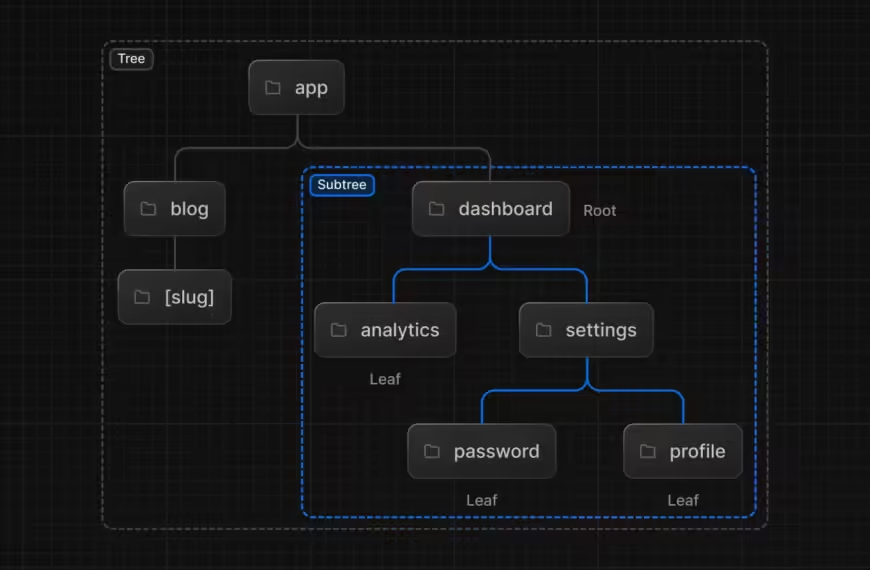
- Site architecture: A well-structured website is easier for search engines to crawl and index. Organize your content logically and create a clear hierarchy of pages.
- HTTPS: Ensure your Shopify store is using HTTPS to provide a secure browsing experience for your customers.
- Robots.txt and Sitemap: Correctly configured robots.txt and sitemap files guide search engine crawlers to the most important parts of your Shopify store.
Tools like Google Search Console can help you identify and fix technical SEO issues on your website.
Creating Compelling Content That Answers Questions
To excel in both voice search and UX, focus on creating content that directly addresses your customers’ needs and answers their questions. Consider the following:
- FAQ Page: A well-organized FAQ page can address common customer inquiries, improve user experience, and potentially rank for voice search queries.
- Blog Posts: Create informative and engaging blog posts that answer questions related to your products and industry.
- Product Descriptions: Write detailed and compelling product descriptions that highlight the benefits of your products and answer common customer questions.
- Video Content: Create video tutorials and demonstrations that showcase your products and address customer concerns.
Use keyword research tools to identify the questions your customers are asking and create content that provides valuable answers.
Monitoring and Adapting Your Strategy
SEO is an ongoing process, and it’s crucial to monitor your progress and adapt your strategy as needed. Use analytics tools to track your website traffic, keyword rankings, and user behavior. Pay attention to metrics such as:
- Organic traffic: Track the amount of traffic you’re receiving from search engines.
- Keyword rankings: Monitor your rankings for relevant keywords.
- Bounce rate: Analyze your bounce rate to identify pages that may need improvement.
- Time on page: Track the average time users spend on your pages.
- Conversion rate: Monitor your conversion rate to see how well your website is converting visitors into customers.
By closely monitoring these metrics, you can identify areas for improvement and refine your Shopify SEO strategy to maximize your results. Remember that the SEO landscape is constantly changing, so it’s important to stay up-to-date with the latest trends and best practices.
Optimizing your Shopify store for voice search and user experience is essential for long-term success in the competitive ecommerce market. By focusing on creating valuable content, improving your website’s speed and mobile-friendliness, and implementing technical SEO best practices, you can attract more customers, improve your search engine rankings, and ultimately, grow your business. Embrace these strategies and stay adaptable to the evolving digital landscape to future-proof your Shopify store for years to come.

 By
By
 By
By