
Running a complex Shopify store with thousands of products can be a dream and a challenge. While a wide selection can attract customers, it also makes SEO more difficult. Standard SEO advice often falls short when dealing with large inventories and intricate site architectures. This guide provides advanced Shopify SEO tactics to improve product discovery, boost organic traffic, and ultimately drive more sales for complex stores. We’ll delve into keyword research nuances, technical SEO best practices, content strategies, and more.
Keyword Research for a Vast Product Catalog
For stores with a large number of products, broad keyword research isn’t enough. You need a granular approach that targets long-tail keywords specific to each product or category.
1. Product-Specific Keywords: Go beyond generic terms. Think about the specific features, benefits, and use cases of each product. For example, instead of just targeting ‘hiking boots,’ aim for ‘waterproof leather hiking boots for women’ or ‘lightweight hiking boots for summer trekking.’ Use keyword research tools like Ahrefs, SEMrush, or Google Keyword Planner to identify these long-tail phrases.
2. Competitor Analysis: Analyze your competitors’ top-performing keywords, especially for products that overlap with yours. Identify gaps in their strategy and opportunities to target underserved keywords.
3. Internal Search Data: Your Shopify store’s internal search data is a goldmine. It reveals what customers are actively looking for but may not be finding. Use this data to identify keyword opportunities and optimize product descriptions accordingly.
4. Category Keyword Mapping: Clearly map keywords to your category pages. Ensure each category targets a specific set of relevant keywords, and avoid keyword cannibalization (where multiple pages compete for the same keywords).
5. Seasonal Keyword Trends: Use Google Trends to identify seasonal peaks in search volume for your products. Optimize your product listings and content accordingly to capitalize on these trends.
Optimizing Site Structure for Crawlability and Indexing
A well-structured website makes it easier for search engines to crawl and index your content. This is crucial for large Shopify stores.
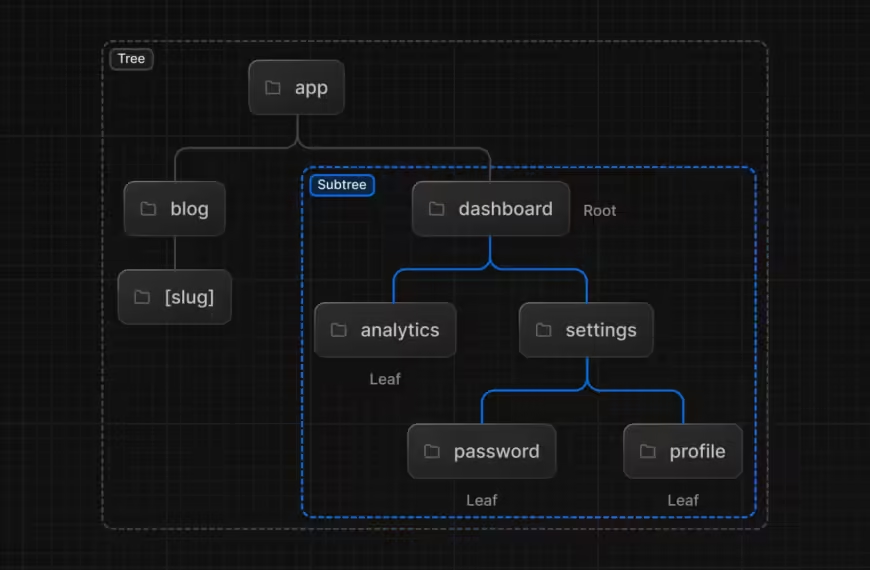
1. Logical Category Hierarchy: Organize your products into a clear and logical category hierarchy. Avoid overly complex or deep structures, as this can make it difficult for search engines to reach your product pages. Aim for a maximum of three clicks from the homepage to any product page.
2. Internal Linking Strategy: Implement a robust internal linking strategy. Link related products and categories to each other to improve navigation and distribute link equity throughout your site. Use descriptive anchor text that includes relevant keywords.
3. XML Sitemap Optimization: Ensure your XML sitemap is up-to-date and includes all your important pages, including product pages, category pages, and blog posts. Submit your sitemap to Google Search Console.
4. Robots.txt Optimization: Use your robots.txt file to prevent search engines from crawling unnecessary pages, such as admin pages, duplicate content, or low-value pages. This helps to conserve crawl budget and improve indexing efficiency.
5. Breadcrumb Navigation: Implement breadcrumb navigation to help users (and search engines) understand the site’s structure and easily navigate back to previous pages.
Technical SEO for Large Shopify Stores
Technical SEO issues can severely hinder the performance of even the best-optimized content. Addressing these issues is essential for maximizing organic visibility.
1. Site Speed Optimization: Page speed is a critical ranking factor. Optimize your images, leverage browser caching, minify CSS and JavaScript, and use a Content Delivery Network (CDN) to improve site speed.
2. Mobile-Friendliness: Ensure your Shopify store is fully responsive and provides a seamless mobile experience. Mobile-first indexing is now the standard, so a mobile-unfriendly site will be penalized.
3. Duplicate Content Issues: Large stores often suffer from duplicate content issues. Use canonical tags to specify the preferred version of a page and avoid duplicate content penalties. Address product descriptions that are similar across multiple products.
4. Structured Data Markup: Implement structured data markup (Schema.org) to provide search engines with more information about your products, such as price, availability, and reviews. This can improve your search engine results page (SERP) visibility and click-through rate.
5. 404 Errors and Redirects: Regularly check for 404 errors and implement 301 redirects to point users and search engines to the correct pages. A broken link structure harms user experience and SEO.
Content Marketing for Product Discovery
Content marketing plays a vital role in driving product discovery and attracting organic traffic to your Shopify store.
1. Blog Content Strategy: Create high-quality blog content that addresses your target audience’s needs and interests. Focus on topics related to your products and industry. Use keyword research to identify relevant blog post topics.
2. Product Guides and Tutorials: Develop comprehensive product guides and tutorials that demonstrate how to use your products and solve specific problems. These types of content are highly engaging and can drive conversions.
3. Customer Reviews and Testimonials: Encourage customers to leave reviews and testimonials. User-generated content is valuable for SEO and can help to build trust and credibility.
4. Infographics and Visual Content: Create visually appealing infographics and other types of visual content to attract attention and share information in an engaging way. Share this content on social media and other platforms to drive traffic back to your store.
5. Video Marketing: Use video marketing to showcase your products, demonstrate their features, and tell your brand story. Upload videos to YouTube and other video-sharing platforms, and embed them on your product pages and blog posts.
Link Building for Authority and Rankings
Earning high-quality backlinks from reputable websites is crucial for improving your Shopify store’s authority and search engine rankings.
1. Guest Blogging: Write guest posts for relevant blogs and websites in your industry. Include links back to your Shopify store in your author bio and within the content of the guest post.
2. Broken Link Building: Identify broken links on other websites and offer your content as a replacement. This is a win-win strategy that helps website owners fix broken links and earns you a valuable backlink.
3. Resource Page Link Building: Find resource pages in your industry and offer to include your Shopify store as a valuable resource.
4. Competitor Backlink Analysis: Analyze your competitors’ backlinks to identify potential link building opportunities.
5. HARO (Help a Reporter Out): Use HARO to connect with journalists and provide expert commentary on relevant topics. This can earn you valuable backlinks from high-authority news sites.
Optimizing a complex Shopify store for SEO requires a multifaceted approach that goes beyond basic tactics. By focusing on granular keyword research, a robust site structure, technical SEO best practices, engaging content marketing, and strategic link building, you can improve product discovery, drive organic traffic, and increase sales. Regularly audit your store’s SEO performance and adapt your strategies as needed to stay ahead of the curve and achieve long-term success.

 By
By
 By
By