
In the ever-evolving landscape of e-commerce, simply stuffing your Shopify store with keywords is no longer a viable SEO strategy. Modern search engines like Google prioritize user experience (UX) and search intent. This means you need to focus on creating a website that not only ranks well but also provides a seamless and valuable experience for your customers. This article will delve into how to optimize your Shopify store for SEO by going beyond basic keyword targeting and embracing a holistic approach that incorporates UX, search intent, and technical SEO.
Understanding Search Intent and Its Impact on Shopify SEO
Search intent refers to the reason behind a user’s search query. Google’s algorithm is designed to understand and fulfill this intent, prioritizing results that best match what the user is trying to accomplish. There are typically four main types of search intent:
- Informational: The user is looking for information (e.g., ‘what is Shopify SEO?’).
- Navigational: The user is trying to reach a specific website (e.g., ‘Shopify login’).
- Commercial Investigation: The user is researching products before making a purchase (e.g., ‘best running shoes’).
- Transactional: The user is ready to buy something (e.g., ‘buy blue sneakers’).
To effectively optimize your Shopify store, you need to identify the search intent behind the keywords you are targeting. For example, if you are selling ‘organic coffee’, you should create content that caters to both commercial investigation (e.g., ‘benefits of organic coffee’) and transactional intent (e.g., ‘buy organic coffee beans’).
How to Address Search Intent:
- Keyword Research: Use tools like Google Keyword Planner and Ahrefs to identify keywords and analyze their corresponding search intent.
- Content Creation: Create different types of content to address different search intents. Blog posts can cater to informational intent, while product pages should focus on transactional intent.
- Landing Page Optimization: Ensure your landing pages are optimized for the specific keywords and search intent they are targeting. Use clear calls to action and relevant content.
Prioritizing User Experience (UX) for Enhanced SEO
Google considers UX as a ranking factor. A positive user experience leads to lower bounce rates, longer session durations, and higher conversion rates – all signals that indicate to Google that your website is valuable and relevant. Key aspects of UX to focus on for your Shopify store include:
- Website Speed: Optimize your images, leverage browser caching, and use a content delivery network (CDN) to improve page load times. Use Google’s PageSpeed Insights to identify areas for improvement.
- Mobile Optimization: Ensure your Shopify store is fully responsive and provides a seamless experience on all devices. Mobile-first indexing means Google primarily uses the mobile version of your site for indexing and ranking.
- Navigation: Create a clear and intuitive navigation structure that allows users to easily find what they are looking for. Use descriptive menu labels and implement faceted search.
- Website Design: Use a clean and modern design that is visually appealing and easy to navigate. Avoid clutter and focus on highlighting your products and value proposition.
- Accessibility: Make your website accessible to users with disabilities by following WCAG guidelines. This includes providing alt text for images, using semantic HTML, and ensuring sufficient color contrast.
Regularly test your website’s UX through user testing and analytics. Gather feedback from your customers and make improvements based on their needs and preferences.
Technical SEO Considerations for Shopify Stores
Technical SEO focuses on the technical aspects of your website that affect its visibility in search engines. While Shopify handles some technical SEO elements automatically, there are still several things you can optimize:
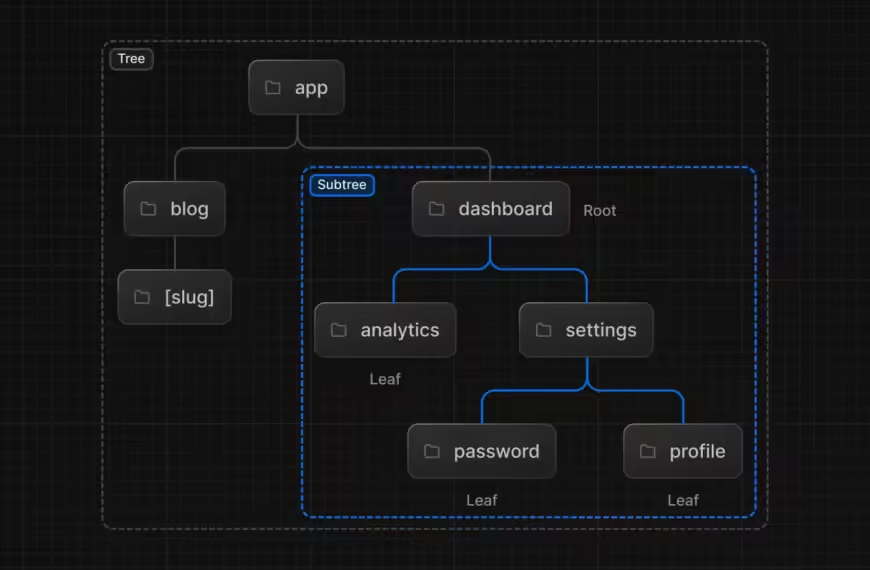
- Website Architecture: Structure your website in a logical and hierarchical manner. Use clear and descriptive URLs and internal linking to guide search engine crawlers.
- Schema Markup: Implement schema markup to provide search engines with more context about your content. This can help improve your search engine rankings and increase click-through rates. Use schema markup for products, reviews, and other relevant content.
- XML Sitemap: Submit your XML sitemap to Google Search Console to help Google discover and index your website’s pages. Shopify automatically generates a sitemap.
- Robots.txt File: Use your robots.txt file to control which pages search engine crawlers can access. This is especially important for excluding sensitive data or duplicate content.
- Canonical Tags: Use canonical tags to specify the preferred version of a page when there are multiple versions with similar content. This helps prevent duplicate content issues.
- HTTPS: Ensure your Shopify store is using HTTPS to provide a secure connection for your customers. HTTPS is a ranking signal.
Regularly monitor your website’s technical SEO health using Google Search Console. Identify and fix any crawl errors, indexing issues, or mobile usability problems.
On-Page Optimization: Beyond Keyword Stuffing
On-page optimization involves optimizing individual web pages to rank higher in search results. While keywords are still important, the focus should be on providing valuable and relevant content that satisfies user intent.
- Title Tags: Write compelling and keyword-rich title tags that accurately reflect the content of the page. Keep them under 60 characters.
- Meta Descriptions: Craft engaging meta descriptions that entice users to click on your search result. Keep them under 160 characters.
- Header Tags (H1-H6): Use header tags to structure your content and highlight important topics. Use your primary keyword in the H1 tag and relevant keywords in the other header tags.
- Content Quality: Create high-quality, informative, and engaging content that is relevant to your target audience. Avoid keyword stuffing and focus on providing value.
- Image Optimization: Optimize your images by using descriptive file names and alt text. Compress your images to reduce file size and improve page load times.
- Internal Linking: Link to other relevant pages on your website to improve navigation and distribute link juice.
Off-Page SEO: Building Authority and Trust
Off-page SEO refers to activities performed outside of your website to improve your search engine rankings. This primarily involves building authority and trust through:
- Link Building: Earn high-quality backlinks from reputable websites in your industry. This can be done through guest blogging, content marketing, and outreach.
- Social Media Marketing: Promote your content on social media to increase brand awareness and drive traffic to your website.
- Brand Mentions: Monitor brand mentions and engage with people who are talking about your brand online.
- Online Reviews: Encourage your customers to leave reviews on your Shopify store and other review platforms. Positive reviews can improve your search engine rankings and build trust with potential customers.
Remember that off-page SEO is a long-term strategy. Focus on building genuine relationships and providing value to your target audience.
Optimizing your Shopify store for SEO requires a multifaceted approach that goes beyond basic keyword targeting. By prioritizing user experience, understanding search intent, and implementing technical SEO best practices, you can create a website that not only ranks well in search engines but also provides a seamless and valuable experience for your customers. Continuously monitor your website’s performance and adapt your strategy based on the latest SEO trends and best practices. With consistent effort and a customer-centric approach, you can drive more traffic, increase conversions, and grow your e-commerce business.

 By
By
 By
By